


















Red-Hairy Fruit with a Burst of Flavor, Tangy and Sweet, That's Who I am!
2023-04-26 Source:三亚市旅游发展局
Many tourists' first impression of rambutan, the red-hairy fruit, remains at the fruit stands in Sanya. They are unsure of how to approach this new and fresh fruit, admiring its bright red appearance but also wary of its hairy exterior. However, despite its prickly appearance, rambutan is fragrant and juicy, which provides a refreshing and cooling sensation during hot weather and thereby carries a sweet childhood memory for many locals in Sanya.
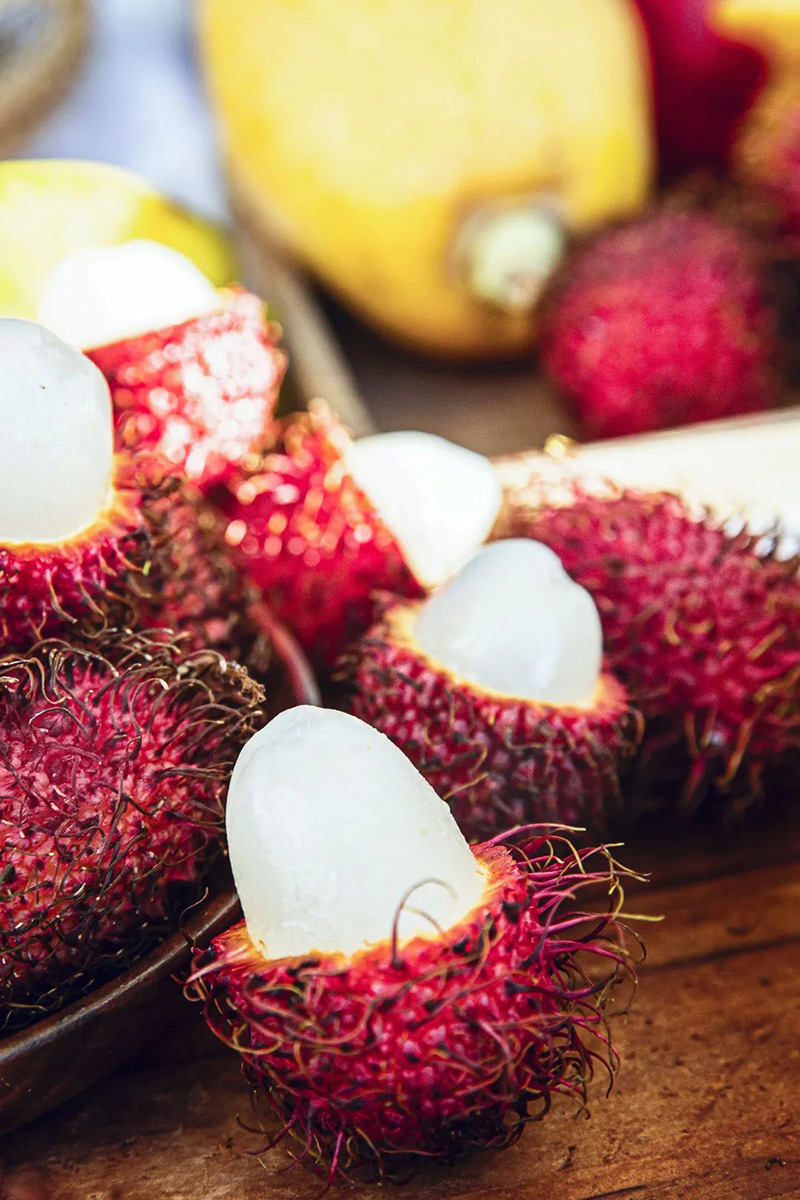
01 Red-Hairy Fruit and Yellow-Hairy Fruit are Both Rambutan
Rambutan, also known as hairy lychee, Shaozi, or red-haired gall, is a tropical fruit that originated in Southeast Asia. The planting area for rambutan is relatively small in China, with only Baoting and Sanya of Hainan having large planting areas.
Rambutan comes in two varieties: red and yellow. Apart from the difference in color, there is no significant difference in taste or texture. Therefore, if you come across yellow "red-hairy fruit" in the market, there's no need to worry. You can buy it with confidence because yellow-hairy fruit and red-hairy fruit are both rambutan!
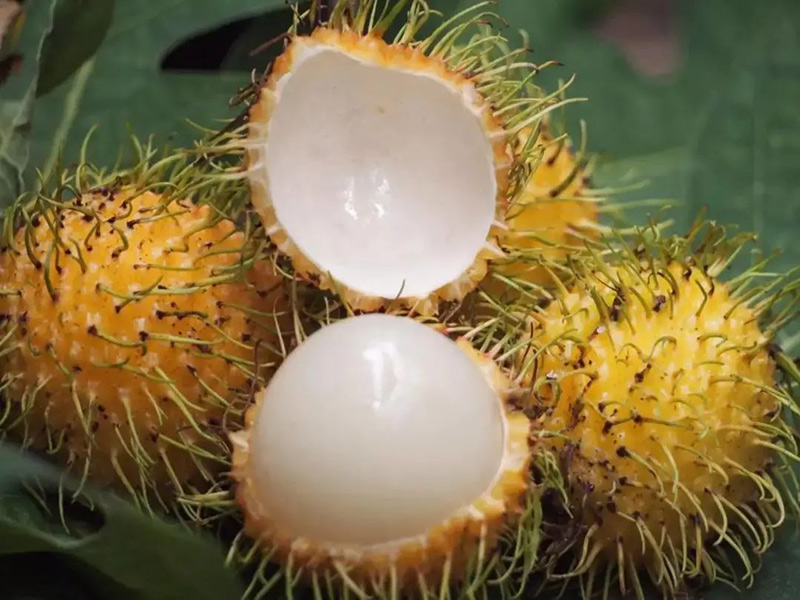
Rambutan, also known as the "king of tropical fruits," has a furry exterior but translucent white flesh. Fresh rambutans are usually bright red in color with slightly green thorns, and the hair on the fruit's skin is soft and resilient. However, the skin of long-stored rambutan may turn black and dull, and the hair on the skin may feel relatively hard when touched. Larger and plump red-hairy fruits with slender and soft hair have a better taste.
02 Rambutan is Delicious but not Easy to Eat
Under its bright red exterior, rambutan has translucent and juicy flesh that is both sweet and sour. The texture is crispy and crunchy, and there is a refreshing fruit aroma. The fruit flesh of rambutan is also rich in vitamins, amino acids, and various minerals. It has the effects of moisturizing and beautifying the skin, clearing heat and detoxifying, and enhancing the body's immunity. The fruit shell can be boiled in water and made into tea, which can reduce internal heat, ease oral ulcers, and relieve diarrhea.
Delicious though it is, this "red hedgehog" could be a nuisance when peeling. Proper peeling can make it easy for you to taste the deliciousness of the fruit. The fruit shell of is thick. You can hold it in your palm and use your thumbs and index fingers to squeeze it inward to open it easily. You can also hold it with both hands and twist it like opening a bottle cap. After the flesh is exposed, don't rush yourself and use your teeth to slowly and gently bite it. If you eat it in one bite, you may accidentally bite the protective film that is tightly connected to the fruit core and fruit pulp. This protective film is very tough and cannot be digested by the stomach. If you have enough patience, you can also slice the flesh into small slices and enjoy them all at once. Although the preparation work is a bit cumbersome, the eating experience will be better.
Before tasting the delicious fruit, there are some precautions for you to notice:
1.People with gastritis, peptic ulcers, and those with yang deficiency constitution should avoid eating rambutan.
2.Even though it's delicious, one should not eat too many red rambutans at once as it may cause a build-up of internal heat.
3.It is recommended rambutans be eaten immediately after purchase and the leftover should be stored in the refrigerator.
03 Hairy Lychee is not Lychee
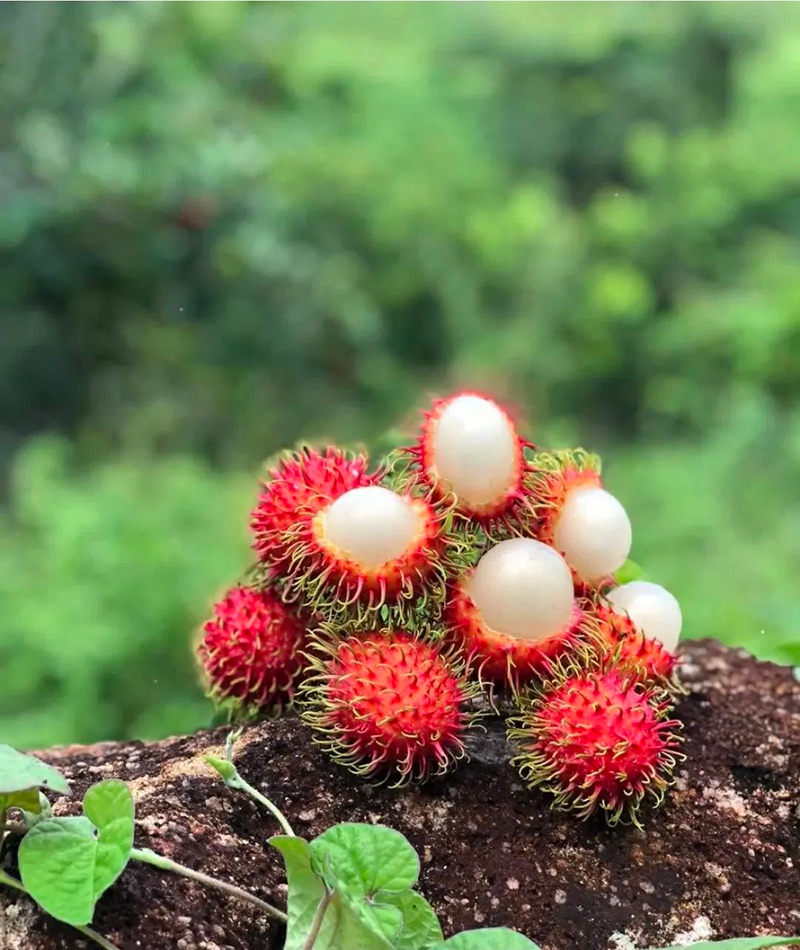
People always mistake rambutan for lychee or a "mutated lychee." Although their flesh may be somewhat similar, they are completely different fruits.
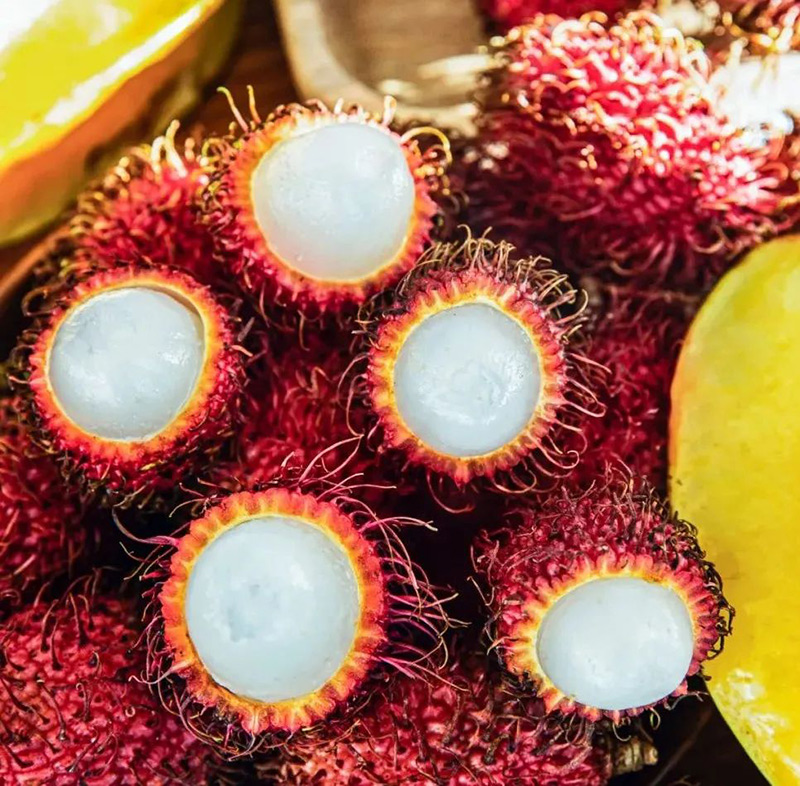
They look different: rambutan has a thicker skin with slender greenish spines, while lychee has a thinner skin with raised scale-like patterns and is usually bright red or purplish.
They taste different: the flesh of rambutan is crunchier and chewier than lychee, with a more sour-sweet and rich flavor. The flesh of lychee is juicier and smoother, with a predominantly sweet taste.
They are harvested in different seasons: Lychees mature mostly in May and June, while the harvesting time for rambutan is longer, usually from August to November.
Under the sunshine in Sanya, with the sea breeze blowing, taking another bite of the sour and sweet "red-hairy fruit with a burst of flavor," happiness reaches its peak in this moment. Nothing beats the summer day leisure like this.
Many tourists' first impression of rambutan, the red-hairy fruit, remains at the fruit stands in Sanya. They are unsure of how to approach this new and fresh fruit, admiring its bright red appearance but also wary of its hairy exterior. However, despite its prickly appearance, rambutan is fragrant and juicy, which provides a refreshing and cooling sensation during hot weather and thereby carries a sweet childhood memory for many locals in Sanya.
01 Red-Hairy Fruit and Yellow-Hairy Fruit are Both Rambutan
Rambutan, also known as hairy lychee, Shaozi, or red-haired gall, is a tropical fruit that originated in Southeast Asia. The planting area for rambutan is relatively small in China, with only Baoting and Sanya of Hainan having large planting areas.
Rambutan comes in two varieties: red and yellow. Apart from the difference in color, there is no significant difference in taste or texture. Therefore, if you come across yellow "red-hairy fruit" in the market, there's no need to worry. You can buy it with confidence because yellow-hairy fruit and red-hairy fruit are both rambutan!
Rambutan, also known as the "king of tropical fruits," has a furry exterior but translucent white flesh. Fresh rambutans are usually bright red in color with slightly green thorns, and the hair on the fruit's skin is soft and resilient. However, the skin of long-stored rambutan may turn black and dull, and the hair on the skin may feel relatively hard when touched. Larger and plump red-hairy fruits with slender and soft hair have a better taste.
02 Rambutan is Delicious but not Easy to Eat
Under its bright red exterior, rambutan has translucent and juicy flesh that is both sweet and sour. The texture is crispy and crunchy, and there is a refreshing fruit aroma. The fruit flesh of rambutan is also rich in vitamins, amino acids, and various minerals. It has the effects of moisturizing and beautifying the skin, clearing heat and detoxifying, and enhancing the body's immunity. The fruit shell can be boiled in water and made into tea, which can reduce internal heat, ease oral ulcers, and relieve diarrhea.
Delicious though it is, this "red hedgehog" could be a nuisance when peeling. Proper peeling can make it easy for you to taste the deliciousness of the fruit. The fruit shell of is thick. You can hold it in your palm and use your thumbs and index fingers to squeeze it inward to open it easily. You can also hold it with both hands and twist it like opening a bottle cap. After the flesh is exposed, don't rush yourself and use your teeth to slowly and gently bite it. If you eat it in one bite, you may accidentally bite the protective film that is tightly connected to the fruit core and fruit pulp. This protective film is very tough and cannot be digested by the stomach. If you have enough patience, you can also slice the flesh into small slices and enjoy them all at once. Although the preparation work is a bit cumbersome, the eating experience will be better.
Before tasting the delicious fruit, there are some precautions for you to notice:
1.People with gastritis, peptic ulcers, and those with yang deficiency constitution should avoid eating rambutan.
2.Even though it's delicious, one should not eat too many red rambutans at once as it may cause a build-up of internal heat.
3.It is recommended rambutans be eaten immediately after purchase and the leftover should be stored in the refrigerator.
03 Hairy Lychee is not Lychee
People always mistake rambutan for lychee or a "mutated lychee." Although their flesh may be somewhat similar, they are completely different fruits.
They look different: rambutan has a thicker skin with slender greenish spines, while lychee has a thinner skin with raised scale-like patterns and is usually bright red or purplish.
They taste different: the flesh of rambutan is crunchier and chewier than lychee, with a more sour-sweet and rich flavor. The flesh of lychee is juicier and smoother, with a predominantly sweet taste.
They are harvested in different seasons: Lychees mature mostly in May and June, while the harvesting time for rambutan is longer, usually from August to November.
Under the sunshine in Sanya, with the sea breeze blowing, taking another bite of the sour and sweet "red-hairy fruit with a burst of flavor," happiness reaches its peak in this moment. Nothing beats the summer day leisure like this.

0898-88616699
0898-88568987
12345
office@visitsanya.com